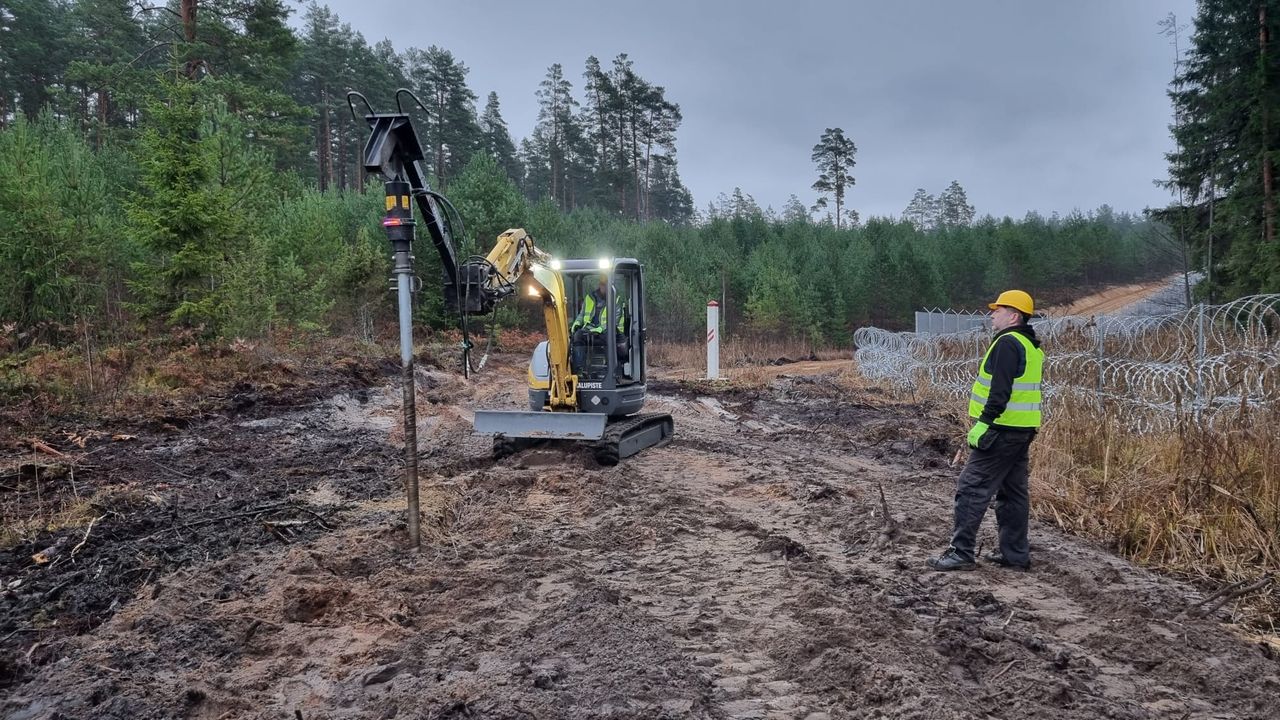
Building on weak ground is always challenging. Whether you’re dealing with clay, made ground, peat or other soft soils, poor ground conditions can quickly increase project costs and complexity. Partly because ground improvement has become the default solution. The thing is, it isn’t actually always the most practical or cost-effective option. In many cases, selecting alternative foundations can deliver much better results, while reducing both delays and costs.
Ground Improvement Alternatives for Weak Substrate
Understanding weak ground conditions
Weak ground covers a wide range of soil types, each with different engineering challenges.
- Highly plastic clays can experience significant shrink and swell movements as moisture levels change.
- Made ground is often variable in composition and strength, making it difficult to predict behaviour.
- Peat and organic soils typically have very low bearing capacity and are prone to long-term settlement.
- Soft alluvial deposits may compress under new structural loads.
The key is understanding not only the type of ground present but also how it will respond to the proposed structure throughout its design life.
When ground improvement isn’t the best answer
Ground-improvement techniques such as soil stabilisation, vibro methods, or deep soil mixing can be effective. But they’re not always the most suitable option. They often need additional plant and specialist contractors. And they almost always extend the overall build time, adding in costs to already limited budgets. There is also no guarantee that the treated ground will be consistent across the site. Which is why changing foundation types can often be more beneficial.
Alternative foundation strategies
Selecting the right foundation system depends on the site’s ground conditions, loading requirements and project constraints. And there are several approaches that are now favoured in the industry.
Helical screw piles
Helical screw piles are one of the most popular solutions. The piles are screwed into the ground until they reach competent load-bearing strata, transferring structural loads away from the unstable surface layers. There’s no excavation or ground treatment. And installation is fast, with minimal disruption, which makes them an attractive option for a wide range of projects.
Bored piles
Traditional driven- or bored-piled foundations are also effective, transferring structural loads in much the same way as helical screw piles. But you need more space for installation equipment, and there is greater site disruption. Installation also takes longer.
Ground beams
Combining ground beams with piled foundations can be particularly useful where variable made ground or soft near-surface soils make traditional strip foundations unsuitable.
Raft foundations
Raft foundations may also be an option in some cases, helping to spread loads across a much larger area, which can reduce settlement where ground conditions are relatively uniform.
In the end, the right solution will come down to the results of your ground investigation and geotechnical and structural input. But for many projects, helical screw piles have the edge.
Early design delivers better outcomes
One of the easiest ways to reduce foundation costs comes during the early design stages. A comprehensive ground investigation lets you know site conditions before foundation options are considered, so you can optimise your solution before you start, rather than improvising as you go. This will almost always lead to simpler construction methods, reduced material quantities, and fewer unexpected issues once work begins on site.
Finding the right solution
Weak ground does not automatically mean expensive ground improvement. If you understand the site’s geotechnical conditions and consider alternative foundation strategies from the outset, you can often find safe, efficient, and cost-effective solutions that avoid unnecessary ground treatment.
Every site is different, especially where weak ground is involved, but there aren’t many sites where helical screw piles can’t be used effectively. Taking the time to fully investigate the site before you start just gives you the option to make that decision earlier.
Do you need support with helical screw pile design, supply, or installation? Get in touch with UK Helix.